Organizing Your Stuff can Be
A Great Stress Reducer
Here is a great stress reducer perspective that adds a museum twist to housekeeping. Organizing your stuff—the stuff that surrounds you in your house or office can become easier to handle when you learn how to sort, eliminate and maintain the objects that are a part of your life.
Here, we are not talking about simply banishing the closet clutter or developing a state-of-the-art pantry. We’re not talking about creating efficient laundry systems or reducing the piles of paper on your desk. We’re talking about filtering your objects and sorting them like a curator sorts objects in a museum.
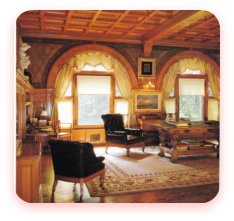
I started my professional career as a curator for a living history village and continued curating with other historic house museums, such as Clayton, pictured to the left. Curating means to organize and to oversee. Museums have curators of collections and curators of education. I was a curator of education and developed the museum programs. Curators of collections organize and exhibit objects that are part of the museum’s permanent collection.
In historic houses, the objects are the items that relate to the owner(s) of the house and the items they used on a daily basis to appoint their dwelling and themselves. What I learned from working with museums is that objects in houses can tell us a lot about the people who lived there. And the objects in my house tell a lot about who I am and what matters to me.
So why do I think that organizing the stuff around you is a great stress reducer? The emotional stress of downsizing can be overwhelming. Being clutter free does not mean living in a sparse and object-free living space. Being clutter free can be a stress reducer if you can eliminate those items that no longer have any purpose or relevance. Objects with stories, objects with convenience, and objects that describe who you are become more visible when extraneous and meaningless items are not surrounding them.
How to Curate A Personal Collection
1. Sort Possessions According to Relevance
Begin by identifying those items that have specific meaning in your life. They are the core of your collection. If you have ever had to downsize for yourself or for elderly family members, you know about sorting and keeping the items that have the most meaning. Things that tell us about where we have been, or have been a part of our history have sentimental value. Books, photos, children’s special toys, holiday ornaments often are part of this group of sentimental objects. They bring out smiles when we remember them in context.
2. Be Aware of New Chapters in Your Life
If you embrace your changing chapters of life, you will be able to sort through objects and eliminate those that no longer have relevance, bring back bad memories, or no longer fit. Keep your treasures and discard the clutter. If you have raised children, you remember sorting through clothes and toys and donating those no longer used by the kids. This same practice holds true with all of us as we continue through life chapters.
3. Learn Proper Object Maintenance
Curators are responsible for the proper care, storage and preservation of objects. We are the curators of our homes, but we call these activities housekeeping chores! Having items properly stored-whether they are clothes, leisure related items or food stuffs, they all need a storage place. Keeping up with minor repairs, keeping a pantry well stocked and having an efficient laundry system are great stress reducers. Yes, your home is your castle and your very own living history museum.
Organizing Your Workplace is a Great Stress Reducer
Become Stress-free and Organized





Join Calm Starts Here, and receive FREE How to Get a Good Night's Rest and Stop Worrying.


Share this Page on SheToldMe.com


Become a FaceBook Fan


